SIGNAL
A signal is any detectable variation in a physical medium (e.g. voltage, current, electromagnetic wave, or pressure) that is used to convey information.
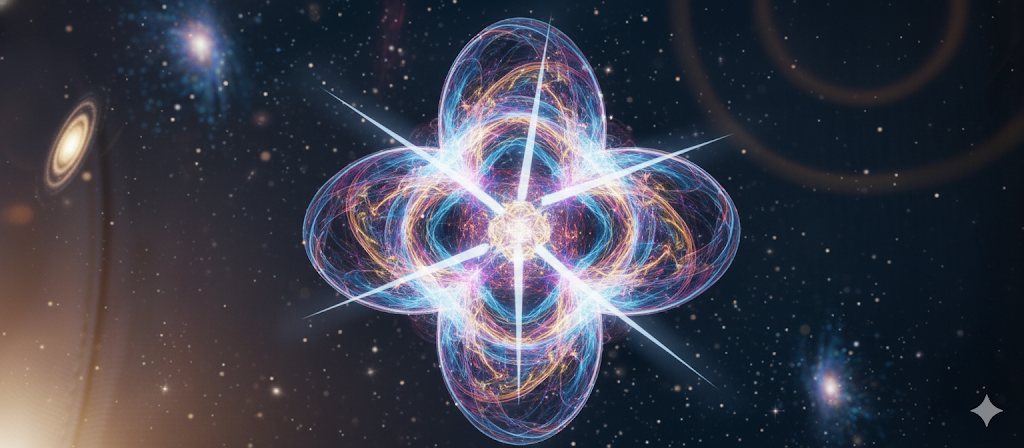
Image generated by AI (Gemini)
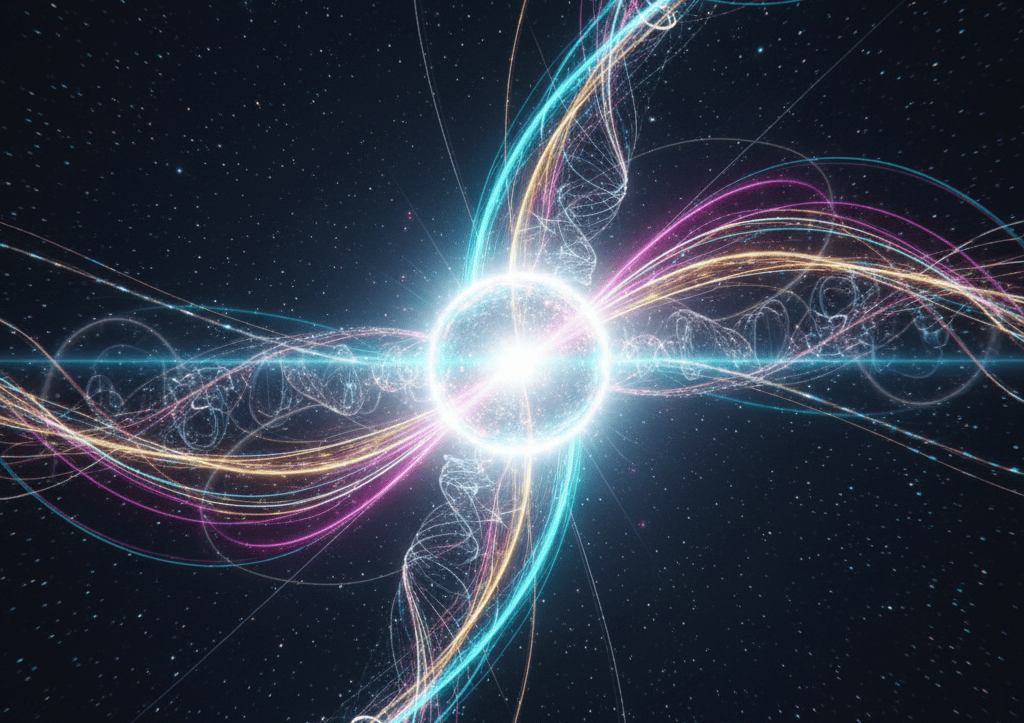
A Cosmic Quadrupole is when two black holes spiral into each other, they don't just move back and forth. They spin around a center, creating a shape that acts like a spinning cross or a four-lobed shape.


SIGNALS & INFORMATION
In both physics and biology, the transmission medium of a signal is the system or substance that mediates the propagation of signals. The variation of the medium is the physical change. A signal is the physical "messenger" that carries information. If information is the content of a message, the signal is the vehicle or the force which is the actual physical change that travels from point A to point B. You can think of it like this: If Information is the purpose of the variation in a physical medium. A simple constant voltage doesn't convey information. It's the change from one state to another (e.g. turning a switch on and off, or modulating a carrier wave) that represents the data, sound, or image being sent. Information is the reduction of uncertainty in the code.


Image generated by AI (Gemini)
In signal processing, information is the specific content or meaning that is extracted from a signal. While a signal is any detectable variation in the physical medium like an electrical pulse or light wave the information is the non-random pattern within that signal that reduces uncertainty for the receiver. It is easy to use these words interchangeably, but they are technically different. The Information is the reduction of uncertainty, the Code or the Sequence (0101) or the instruction. The Signal is the physical manifestation of that Code.
Example: You can think of it like watching a "magical spider" weave a web of photons. If the code is the sequence "0101" and the instruction is "Make a web." Then, the information is the pattern of the web, but the signal is the physical manifestation of that code. Signal is the actual light (photons) bouncing off the silk and hitting your eyes or a pulse of electricity or a splash of chemicals.


Image generated by AI (Gemini)
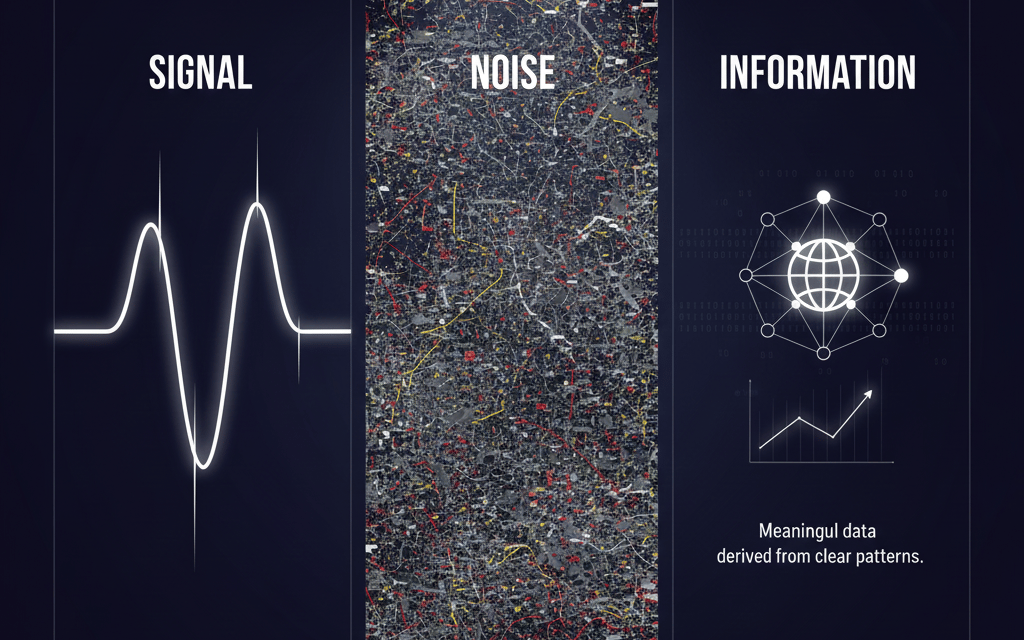
SIGNALS IN PHYSICS
In science the exact definition of a signal actually changes depending on whether if you are a chemist (who deals with atoms) or a physicist (who deals with subatomic particles). In physics, a signal is any time-varying physical quantity that carries information about a phenomenon. The Medium: Signals must exist in a physical medium. This could be an electromagnetic wave (light/radio), a pressure wave (sound), or an electrical voltage. The Variation: A signal is only a signal if it changes. A perfectly flat line or a constant, unchanging hum carries no information because it has no "surprises." Scientific Insight: In quantum physics, even a single photon can be a signal. It carries "qubits" of information in its polarization or frequency.
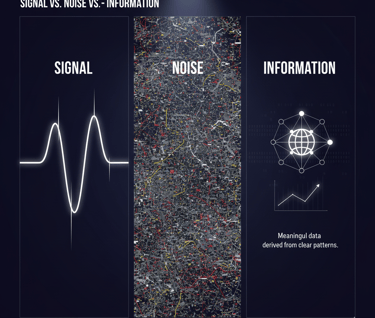
Signal vs. Noise vs. Information: Physics distinguishes between the Signal (the part of the wave you want) and Noise (random fluctuations that interfere with the message) and Engineers make a strict distinction between the three components: The Signal: The overall physical wave or sequence of numbers (the "messenger"). The Noise: Random, unwanted fluctuations that carry no information and obscure the message. The Information: The "useful" part of the signal that remains once you filter out the noise.
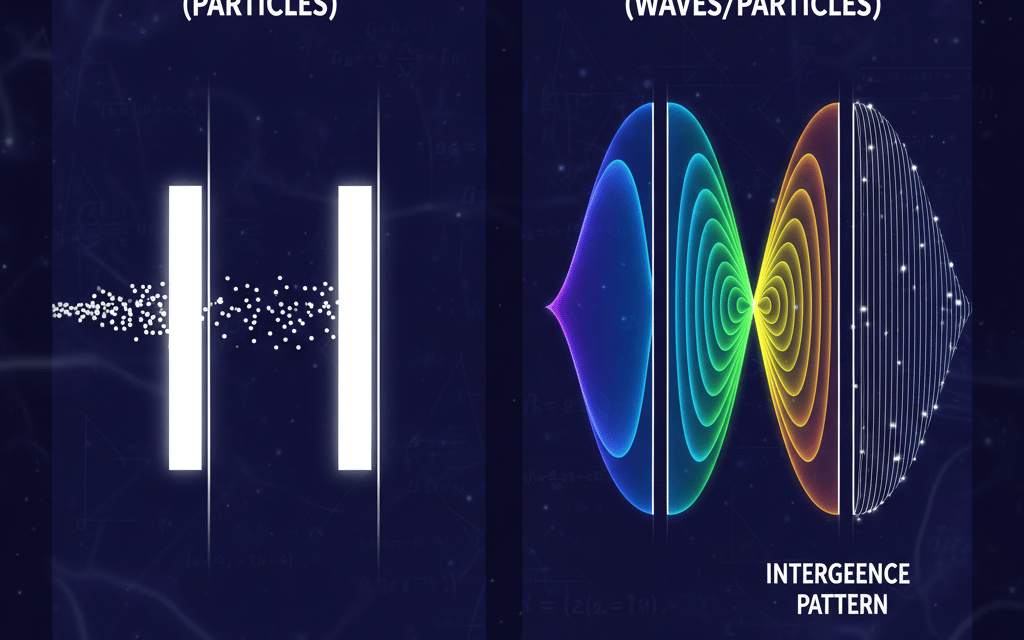

Image generated by AI (Gemini)
Image generated by AI (Gemini)


In biology, a signal is a detectable change (chemical, electrical, or physical) that results in a functional response in a living system. Intracellular Signals: Molecules like cAMP or calcium ions act as signals inside a cell to tell it to grow, move, or die. Intercellular Signals: Hormones like insulin are signals sent through the blood to tell distant organs how to behave. Environmental Signals: Light hitting a plant’s leaf is a signal that triggers the process of photosynthesis we discussed earlier.
SIGNALS IN BIOLOGY
Image generated by AI (Gemini)
CAT SIGNALS FROM SPACE
The historic cat video beamed from a distance of 19 million miles away. It took the light signal 101 seconds to travel from the spacecraft to Earth. Taters Chasing a Laser: The cat video was successfully transmitted to Earth on December 11, 2023, by NASA's Deep Space Optical Communications (DSOC) experiment.

Credit: NASA/JPL-Caltech
SIGNALS AND FORCES
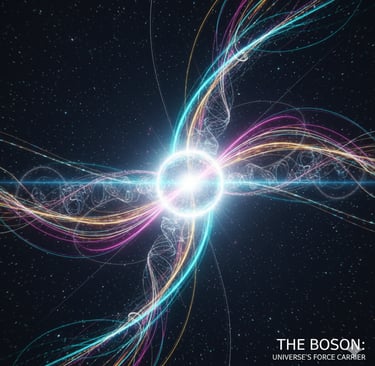
The four fundamental forces that govern all physical interactions in the universe are: Gravitational, Electromagnetic, Weak Nuclear, and Strong Nuclear. Each one is theoretically associated with a force-carrying particle (a boson), which can be considered the signal or carrier of that force. BOSON: Understanding what is a boson helps explain the different particles that make up the universe and the forces that govern their interactions.
Image generated by AI (Gemini)
SIGNALS AND STRUCTURE
The signal is the only thing that creates structure. Without those "signals" (bosons) flying back and forth to tell particles how to behave, the universe would instantly dissolve. It is the "message" being passed between them that says, "Move away!" or "Come closer!"


Image generated by AI (Gemini)
UNBOUND SIGNALS
Voyager1 achieved "Solar System Escape Velocity" and is moving faster than the sun can reel it in. It is the ultimate test of the electromagnetic field and currently stretching our radio signal to its absolute limit. It is mathematically unbound.
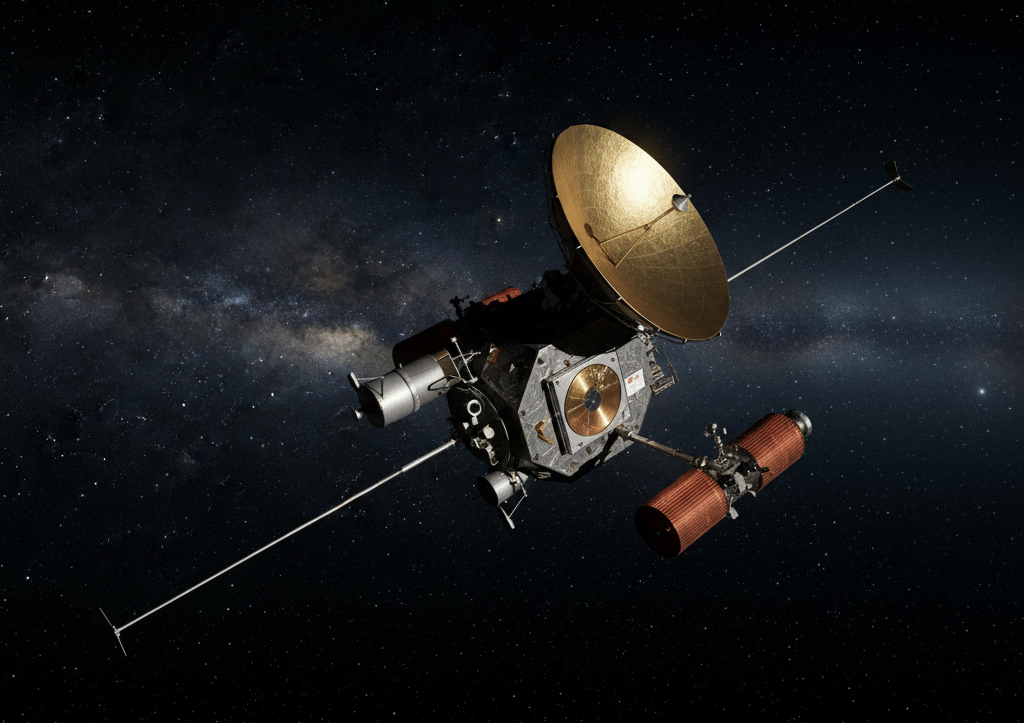
Image generated by AI (Gemini)
SIGNALS AND TIME
Engineers and Scientists categorize signals in several ways, primarily on how they behave over time. Time Domain vs. Frequency Domain Information: In practical signal processing, we categorize information based on how it is "hidden" in the signal: Time Domain Information describes when an event happens and its amplitude. Example: A sensor recording a sudden vibration. The exact millisecond the vibration starts and how "big" it is provides the information. Relevant Tool: Step response. Frequency Domain Information: This describes the periodic patterns or "rhythm" within a signal. Example: In audio processing, information is often found in the pitch (frequency) of a sound rather than a single moment in time. Relevant Tool: Fast Fourier Transform (FFT). In signal processing, information is the specific content or meaning that is extracted from a signal. While a signal is the physical "carrier" (like an electrical pulse or a light wave), information is the non-random pattern within that signal that reduces uncertainty for the receiver.
Image generated by AI (Gemini)